V
VA Home Loans for Veterans & Military Families
VA Home Loan Experts for Veterans & Military Families
Using your VA home loan benefit should not be confusing.
Veteran Community Mortgage helps Veterans, active-duty service
members and military families understand their VA home loan options,
build the right strategy and move forward with confidence from first-time
homebuying and PCS moves to refinancing, military retirement and VA construction.
⚑ VA Home Loan Education
♙20+ Years of Mortgage Experience
♡ Veteran & Military Family Focused
☆ Led by VA Loan Educator Jason Stier
VA Topics
Your VA Benefit Is More Than a Loan Program. Know How to Use It.
The VA home loan is one of the most valuable benefits earned through military service,
but the rules can feel complicated. Our job is to make them easier to understand and
help you build a strategy around your actual situation.
VA Loan Eligibility & Entitlement
Understand who is eligible, how entitlement works, whether you can use the benefit more than once and what happens when you already have a VA loan.
Buying With a VA Loan
Buying With a VA Loan
Learn how VA financing works from pre-approval through closing, including offers, closing costs, seller concessions and the VA appraisal.
PCS & Military Moves
Buying before a PCS? Deciding whether to sell or rent? Moving before the family arrives? Start with guidance built around the realities of military relocation.
Military Retirement &
VA Disability
Understand how military retirement, pending retirement and eligible VA disability income may affect your homebuying strategy and mortgage qualification.
VA Refinancing &
Assumptions
Learn how VA IRRRLs, VA cash-out refinancing and VA loan assumptions work and when each option may or may not make sense.
VA Construction Loans
Want to build instead of buy an existing home? Learn how VA construction and One-Time Close financing can work for eligible Veterans and service members.
Meet The VA Loan Boss
With over 21 years of experience in the mortgage industry, Jason Stier has built a reputation as a trusted, knowledgeable, and approachable loan officer who goes above and beyond for his clients. Known as the “VA Loan Boss,” Jason combines expertise with a deep passion for serving Veterans, military members, and their families through Veteran Community Mortgage. His mission? To ensure those who’ve served our country can navigate the path to homeownership with confidence and ease.
Jason’s years in the industry have sharpened his greatest skills: expert communication, problem-solving, and the ability to simplify complex financial processes. Whether breaking down the nuances of VA loan benefits or navigating challenging credit situations, Jason excels at turning what can feel overwhelming into an empowering experience.
When Jason isn't helping Veterans achieve their homeownership goals, he enjoys spending quality time with my family, traveling, and staying active through golf and pickleball. He's also passionate about connecting with and supporting Veteran-focused charities and organizations that make a positive impact in the lives of those who have served our country. Giving back to the Veteran community is something he values deeply, both professionally and personally.
Start With Your Situation
Where Are You in the Process?
You do not need to know every VA rule before you start. Find the situation that
looks most like yours and begin there.
I Want to Buy a Home
Understand your VA eligibility, buying power,
pre-approval and what to expect from offer to closing.
I Have PCS Orders
Build a housing strategy around your move,
timeline, current home and next duty station.
I Already Own a Home
Explore VA refinancing, assumptions, remaining entitlement and options for using your benefit again.
I Want to Build a Home
Learn how VA construction and One-Time Close
financing can help eligible borrowers finance a new build.
VA Home Loan Knowledge Center
Get Straight Answers
About the VA Home Loan
You should not have to dig through lender sales pages, social media
opinions and outdated information to understand your VA benefit.
The Veteran Community Mortgage Knowledge Center is being built to
answer the questions Veterans and military families actually ask in
plain English, with direct answers, real-world context and links to
authoritative sources when the rules matter.
The VA Process
How the VA Home Loan Process Works
Every situation is different, but most VA home purchases
move through these five stages.
Build Your Strategy
We start with your goals, military timeline, finances and how you plan to use the property.
VA Loan Pre-Approval
We review your qualification and VA eligibility so you understand your buying range before you start making offers.
Find the Right Home
You and your real estate agent search for a property that fits your needs, budget and VA financing strategy.
Appraisal & Underwriting
The property and loan are reviewed, including the VA appraisal and the documentation required for final loan approval.
Closing
Once the loan is cleared and closing requirements are satisfied, you sign the final documents and complete the purchase.
Why VCM
Why Veteran Community Mortgage?
We built Veteran Community Mortgage around a simple belief: military families
deserve more than a lender who happens to offer VA loans. They deserve
people who understand the benefit, teach the process and know the questions
to ask before problems show up.
VA-Focused Guidance
Our education, process and resources are
built around the VA home loan and the situations
military families regularly face.
Education Before Pressure
We want you to understand the benefit,
the numbers and the tradeoffs before you
make a decision.
Strategy for Real Military Life
PCS orders, deployments, retirement, disability income, existing VA loans and future moves can change the strategy. We account for the bigger picture.
I Want to Build a Home
Learn how VA construction and One-Time Close
financing can help eligible borrowers
finance a new build.
Don't take my word for it
Frequently Asked Questions
Can I use a VA loan more than once?
Yes. The VA home loan benefit can generally be used more than once. Depending on your situation, you may restore previously used entitlement or have remaining entitlement available while another VA loan is still outstanding. Your available entitlement and qualification should be reviewed for your specific scenario.
Can I have two VA loans at the same time?
It can be possible. Some eligible Veterans and service members can have more than one VA-backed loan at the same time when sufficient entitlement remains and the new loan meets applicable VA occupancy and lender qualification requirements.
Does a VA loan require a down payment?
VA-backed purchase loans can allow eligible borrowers to purchase with no down payment when the loan and borrower meet applicable VA and lender requirements. A down payment may still be required or strategically useful in certain situations.
What credit score do I need for a VA loan?
The Department of Veterans Affairs does not establish a single minimum credit score for all VA-backed loans. Lenders evaluate credit and may establish their own requirements, so qualification can vary by lender and by the overall loan profile.
What is VA loan entitlement?
VA loan entitlement is the amount of guaranty the Department of Veterans Affairs provides to an eligible borrower's VA-backed loan. Entitlement can affect how the benefit is used again, particularly when a borrower already has an outstanding VA loan or has not restored previously used entitlement.
Can VA disability income be used to qualify for a mortgage?
Eligible VA disability compensation can generally be considered as qualifying income when it is properly documented and meets applicable lending requirements. Certain non-taxable income may also receive special consideration when qualification is calculated.
What happens if I receive PCS orders after buying a home?
PCS orders do not automatically mean you must sell your home. Depending on your finances, entitlement, rental market, next duty station and long-term goals, selling, renting or keeping the property may each be worth evaluating.
Can I build a home with a VA loan?
VA-backed financing can be used for certain new-construction transactions when the borrower, property, builder and loan structure meet applicable requirements. VA construction lending is more specialized than a standard VA purchase, so the process and available loan structure should be reviewed before selecting a builder or property.
Latest Education
Latest From Veteran Community Mortgage
Clear answers, current VA guidance and practical homeownership
strategies for Veterans, service members and military families.
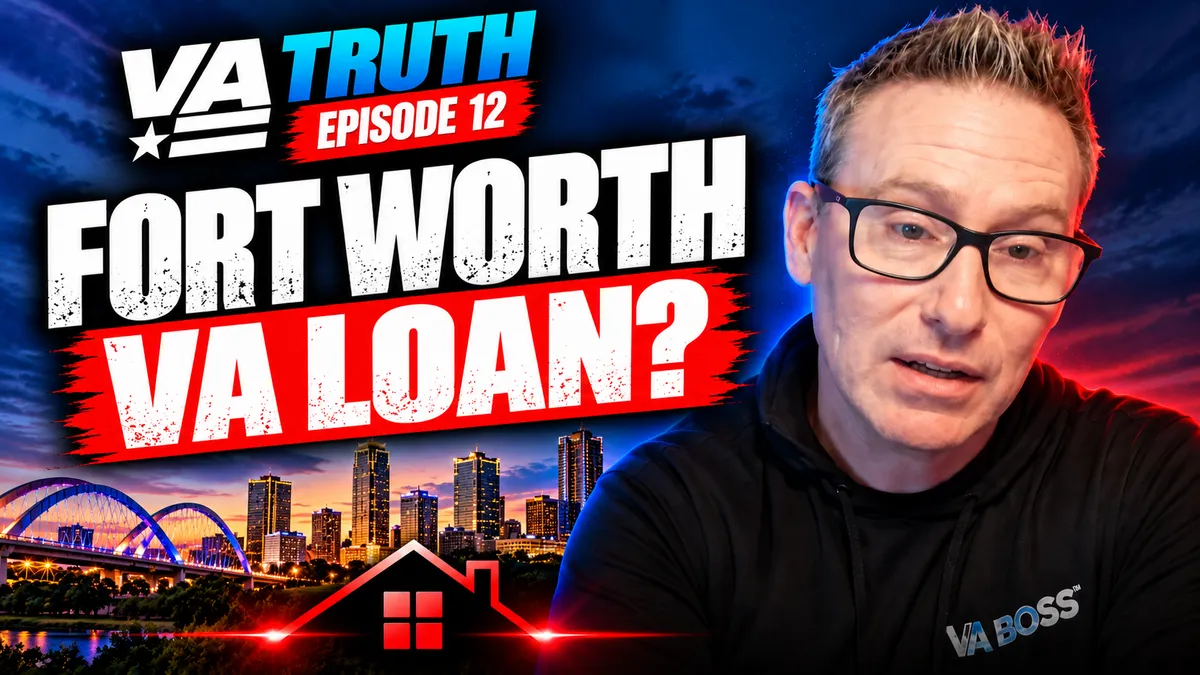
Buying in Fort Worth With a VA Loan: 5 Things to Check Before You Make an Offer With Jason Stier
Before You Fall in Love With a Listing
Buying a home in Fort Worth with a VA loan comes with details that online calculators and advertised incentives rarely show. Jason Stier, known as the VA loan boss, has spent more than twenty years working with military families and has lived in the Fort Worth area for fifteen years. He wants buyers in Tarrant County to understand that a zero down loan does not mean zero closing costs, and that the payment shown on a generic online calculator is not always the payment you will actually owe. Here are the five things he recommends checking before making a VA offer.
Stop Shopping by Principal and Interest Alone
The first mistake is focusing only on principal and interest. A realistic monthly payment also includes property taxes, homeowner insurance, and possible HOA dues. Two homes with the same sales price can carry very different monthly costs. Jason encourages buyers to ask their lender to run side by side estimates that include every one of those pieces. Otherwise a buyer may get excited about a low quoted payment and then see a loan estimate where taxes and insurance add up to far more than expected.
On new builds, ask how the taxes are estimated. Do not assume last year’s tax bill applies, especially if the figure reflects only the lot. Once the home is completed it will be reassessed, and the taxes can rise significantly.
Property Tax Exemptions Are Valuable but Not Automatic
Texas offers strong property tax benefits for veterans, especially those rated 100% disabled. Those exemptions are not automatic. They must be applied for. For a veteran rated 100%, taxes can be cleared out of the qualifying calculation under Texas law. For veterans with lower ratings, such as 90% or 80% and below, partial exemptions may apply and are taken off the assessed value, working alongside the homestead exemption. The Texas Veterans Commission lists the details on its website.
Jason’s caution is clear. Confirm your eligibility, understand how the tax treatment works, and do not budget around an exemption until it is actually in place. A lender cannot include a partial exemption in your qualifying until it exists.
Do Not Let Builder Incentives Make the Decision
New construction is popular around Fort Worth, and builders are offering large incentives. Jason advises buyers not to let the headline offer drive the decision. A builder may advertise money toward closing costs or a lower rate, so ask whether the incentive is temporary or permanent and what it really costs. He shared an example where a buyer was promised a rate of 5.25% that was not available on a 30-year fixed rate sheet, and the loan ended up at 6.25%. Track the discount points and what you are being charged, and compare estimates honestly. Without that comparison, a buyer can be set up for a payment shock once taxes are assessed.
The VA Appraisal Is Not a Home Inspection
The VA appraisal and a home inspection are two different jobs. The appraisal looks at minimum property requirements and valuation. It does not replace an inspection of the home’s systems. Jason urges buyers to get a separate home inspection and not to listen to anyone who tries to talk them out of it. Repairs found by the inspector are items for the buyer and the realtor to negotiate with the listing agent and seller.
A short appraisal or a repair issue does not mean the deal is dead. Property condition issues are usually manageable on a VA loan, and negotiation is where the right team makes a difference. Your team matters.
Do Not Let Anyone Tell You a VA Offer Is Weak
Some people still believe a VA offer is a weak offer. Jason disagrees. A clean pre-approval and a lender who understands the program can make an offer highly competitive. Credit, income, assets, residual income, the certificate of eligibility, and realistic timelines should all be in order. Sellers want confidence that the buyer can close, and preparation is what provides it, not promises.
Ask Better Questions Than “What’s My Rate?”
Jason’s final advice is to move beyond asking about the rate. Ask what your real payment is and what the real cost is. Ask whether you are eligible for property tax exemptions and what the builder incentives are actually worth. Ask what the property needs and whether your offer is structured correctly. For the first time in a decade, buyers have an opportunity to be in the driver’s seat in this market.
Reach Out to Jason Stier
If you are active duty and moving to Tarrant County, or you are a veteran or military family buying in or around Fort Worth, leave your questions in the comments or use the contact information provided. Jason will answer questions and set up a consultation with no sales pressure, just answers about the benefit you earned. His mission is to defend what is earned.
Sources
VA.gov
TVC.Texas.gov
Comptroller.Texas.gov
ConsumerFinancialProtectionBureau.gov
HUD.gov

Mortgage Calculator
See your total mortgage payments using the tool below.
| Year | Interest | Principal | Balance |
|---|
Have a VA Loan Question?
Start With the Strategy.
You do not need to figure out the VA home loan on your own. Whether you are
buying, refinancing, PCSing, retiring from the military or planning a new
construction home, start by understanding your options and the next step that
makes sense for your situation.