
Why Judging a Rental Property on Monthly Cash Flow Alone Is Setting You Up for a Costly Surprise
The Spreadsheet That Looks Great Until It Does Not
Chasing three or four hundred dollars a month in cash flow from a rental property sounds like a solid plan. Until one HVAC repair wipes out two full years of that profit and the strategy that looked compelling on paper suddenly does not look quite as compelling anymore.
Jason Stier wants real estate investors and military families evaluating rental properties to understand what the monthly cash flow number is not telling them about how real estate actually builds financial freedom.
What You Miss When Cash Flow Is the Only Metric
When the evaluation begins and ends with day one mailbox money the investor is looking at one variable in a four-variable equation. Optimizing for that one variable while ignoring the other three is how investors end up in properties that feel like they are performing adequately until something goes wrong and the true return picture becomes clear.
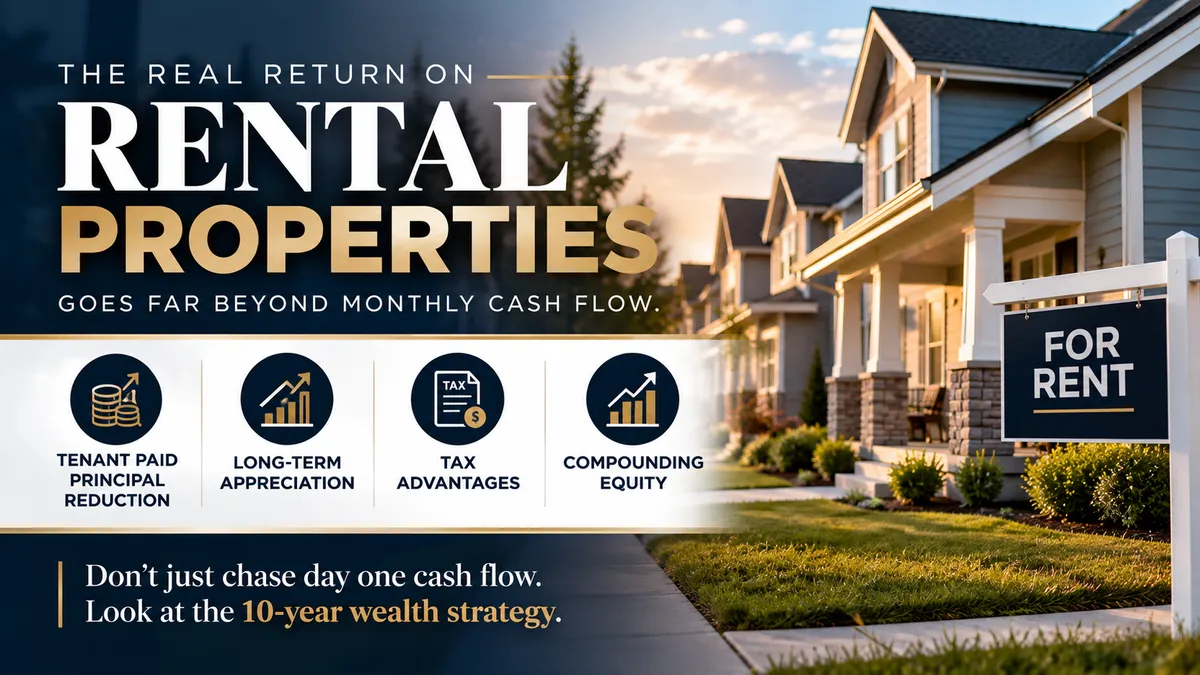
The real return in rental real estate comes from four pillars working together simultaneously.
The Four Pillars That Actually Build Wealth
Tenant-paid principal reduction is happening every month whether the investor thinks about it or not. Every mortgage payment the rental income covers is reducing the loan balance and building equity that belongs to the owner. The tenant is paying down the debt while the owner holds the asset.
Long-term appreciation is where significant wealth accumulates over a ten-year hold. Properties that produce modest monthly cash flow in year one are often worth meaningfully more in year ten and the equity created through that appreciation far exceeds what monthly cash flow would have produced over the same period.
Tax advantages in real estate are substantial and frequently underutilized. Depreciation, mortgage interest deductions, and other tax benefits reduce the cost of ownership in ways that do not show up in the monthly cash flow calculation but absolutely affect the real return on the investment.
Compounding equity is what happens when all three of the above work together over time. When the loan is structured correctly the balance sheet grows even during the months that feel quiet from a cash flow perspective. The equity position compounds as appreciation builds on top of principal paydown building on top of tax-sheltered returns.
What the Ten-Year View Actually Shows
Stop judging properties only by what they put in the mailbox on day one. The investor who holds a well-chosen property for ten years with the loan structured correctly accumulates wealth through all four pillars simultaneously. The investor who chases maximum monthly cash flow and ignores the other three pillars may find themselves holding properties that feel fine month to month and disappoint over the long term.
This matters especially for military families who often have access to VA financing that creates favorable loan structures for investment and who move frequently enough that understanding long-term property performance rather than short-term cash flow is critical to making sound real estate decisions.
Hit the like button, send Jason Stier a DM, and start the conversation about how to evaluate rental properties the right way for your situation and your goals.
Sources
NAR.realtor
MortgageNewsDaily.com
ConsumerFinancialProtectionBureau.gov
Investopedia.com
VA.gov