
The Fed Left Rates Unchanged on July 29 and Here Is What That Actually Means for Mortgage Rates
What the July 29 Fed Decision Actually Means and What It Does Not
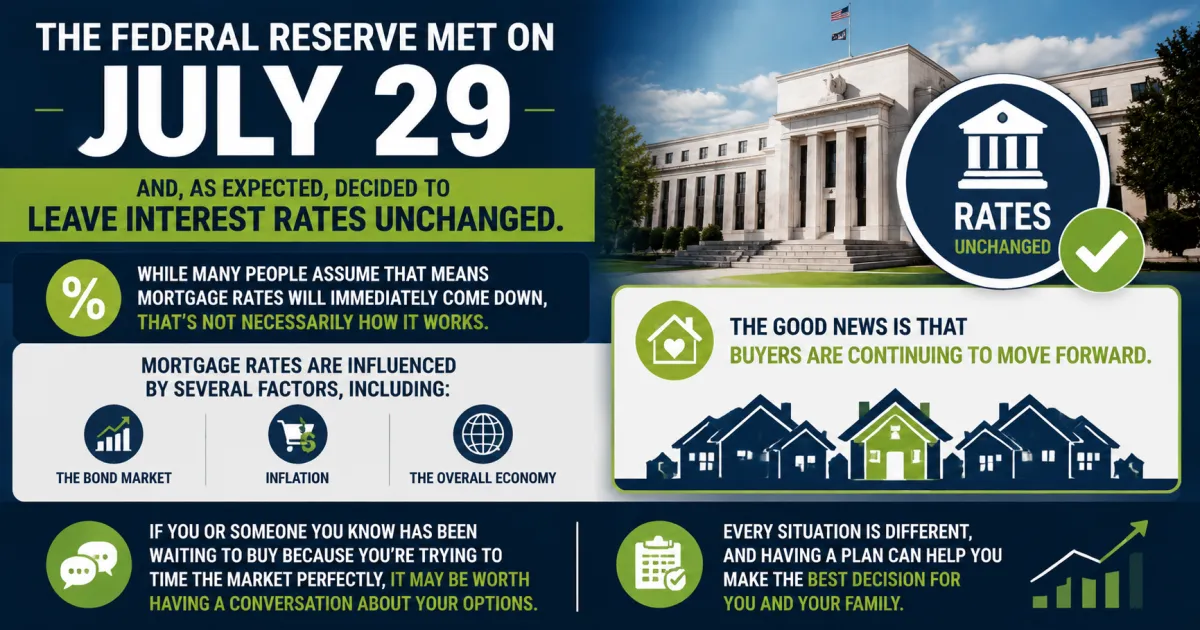
The Federal Reserve met on July 29 and did exactly what most market participants expected. They left interest rates unchanged. For buyers and homeowners who have been watching the Fed calendar hoping for a signal that mortgage rates are about to improve the honest explanation of what this decision means matters more than the headline.
Why a Fed Hold Does Not Automatically Move Mortgage Rates
The assumption that Fed rate decisions translate directly and immediately into mortgage rate movement is one of the most persistent misunderstandings in the homebuying conversation. When the Fed holds rates it does not mean mortgage rates stay where they are. When the Fed cuts rates it does not mean mortgage rates drop by the same amount on the same day.
Mortgage rates are influenced by a different set of factors than the federal funds rate. The bond market is the primary driver and specifically the ten-year Treasury yield which moves based on investor expectations about inflation, economic growth, and future Fed policy rather than the Fed's actual decisions in the moment. Inflation data matters. The overall economic picture matters. Global events that affect energy prices and inflationary expectations matter.
As Jason Stier explains the mortgage market often anticipates Fed moves well in advance and prices them in before any official announcement is made. By the time the Fed acts the bond market has frequently already moved. What the July 29 decision signals about the path forward is arguably more important than the decision itself.
What Is Actually Happening for Buyers Right Now
Despite the rate environment buyers are continuing to move forward. The market has not stopped and the opportunities that exist for buyers who are prepared and positioned correctly are real.
Sellers in many markets are negotiating in ways they were not a year or two ago. Closing cost credits, rate buydowns, and price reductions are available tools that can meaningfully improve a buyer's financial position even in a higher rate environment. The combination of those seller contributions with the right loan structure can produce a monthly payment that works better than buyers who are not having the full conversation often expect.
Why Having a Plan Matters More Than Timing the Market Perfectly
If you or someone you know has been waiting to buy because the goal is to time the market perfectly it may be worth having a different conversation. Nobody times the market perfectly. The buyers who consistently make good decisions are the ones who have a clear plan built around their specific situation, their actual budget, their goals, and the tools available to make the purchase work in the current environment.
Every situation is different. What the right move looks like for one buyer is not the right move for another. The conversation that identifies which path makes the most sense for your family is the one worth having now rather than after another round of waiting for conditions that may or may not arrive on your preferred schedule.
Jason Stier works with buyers to build that plan and to make sure the decision to buy or wait is based on a full and accurate picture of what is available right now. Reach out to Jason Stier to have that conversation about your specific situation and what the right next step looks like for you.
Sources
FederalReserve.gov
MortgageNewsDaily.com
TreasuryDirect.gov
ConsumerFinancialProtectionBureau.gov
BankRate.com