
Most Economists Are Not Expecting a 2008 Housing Crash and Here Is What Buyers Should Do Instead
The Question That Comes Up Constantly and the Honest Answer
Should you just wait for the housing market to crash before buying? It is one of the most common questions Jason Stier hears and it deserves a clear and honest answer grounded in what the current market actually shows rather than what the scary headlines suggest.
The short answer is that most economists are not expecting a repeat of 2008. But understanding why requires looking at what made 2008 what it was and why the current market does not share those characteristics.
Why 2008 Was Different and Why Today Is Not That
The 2008 housing crisis had specific and identifiable causes. Lending standards were dangerously loose and millions of buyers were placed into mortgages they could not realistically sustain. Home prices had been inflated by easy credit and speculative demand rather than genuine housing need. When those foundations gave way there was nothing structural underneath to support the market.
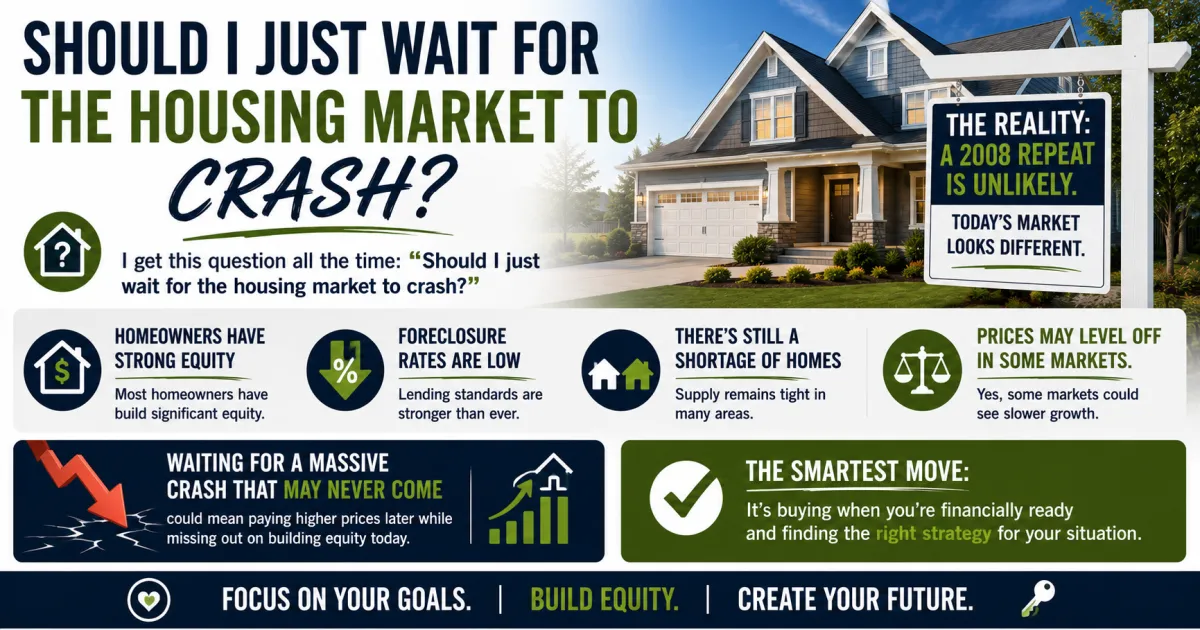
Today's market looks very different on every one of those dimensions. Homeowners have substantial equity built through years of appreciation and principal paydown. Foreclosure rates remain low. Lending standards have been significantly tighter since the qualified mortgage rules went into effect after 2008. And the fundamental supply problem driving prices in many markets is a genuine shortage of homes rather than speculative overbuilding.
What Could Actually Happen
As Jason Stier explains prices could level off in some markets. In areas where appreciation has run significantly ahead of income growth some softening is possible and has already happened in isolated markets.
What is not being projected by most economists is the kind of broad severe sustained price decline that would make waiting for a crash the winning strategy. The conditions that produced 2008 are not present in the same way and the structural shortage of housing supply in many markets creates ongoing demand pressure that did not exist in the run-up to the last crisis.
The Real Cost of Waiting for Something That May Not Come
Waiting for a massive crash that may never arrive has a compounding cost that buyers tend to underestimate when they make the decision to wait.
Every month of waiting is a month of equity not building. Every month of appreciation that happens without ownership is wealth accumulating for someone else. And if rates improve during the waiting period demand returns with them. More buyers competing for the same limited inventory pushes prices back up and the negotiating leverage that exists in a quieter market disappears exactly when the buyers who have been waiting finally decide to act.
What the Smartest Move Actually Is
Trying to perfectly time the market is not a reliable strategy for most buyers. The smartest move is buying when you are financially ready and finding the right strategy for your specific situation given what the current market actually offers.
Jason Stier works with buyers to evaluate their specific financial readiness and to build a purchasing strategy that makes sense for where the market is rather than where buyers hope it will be. Reach out to Jason Stier to find out what the right move looks like for your situation right now.
Sources
NAR.realtor
MortgageNewsDaily.com
FederalReserve.gov
ConsumerFinancialProtectionBureau.gov
Investopedia.com