
How the Iran Conflict Pushed Mortgage Rates to 6.75 Percent and Why the Peace Deal Is Bringing Relief
The Chain Reaction That Has Been Moving Your Mortgage Rate Since February
If mortgage rates have felt like they were responding to global headlines rather than anything happening domestically over the past several months that is exactly what has been driving them. The connection between the Iran conflict and the rate being quoted to buyers and veterans right now is direct and worth understanding clearly because knowing the mechanism is what allows you to position yourself to act when the window opens.
How the Conflict Pushed Rates Higher
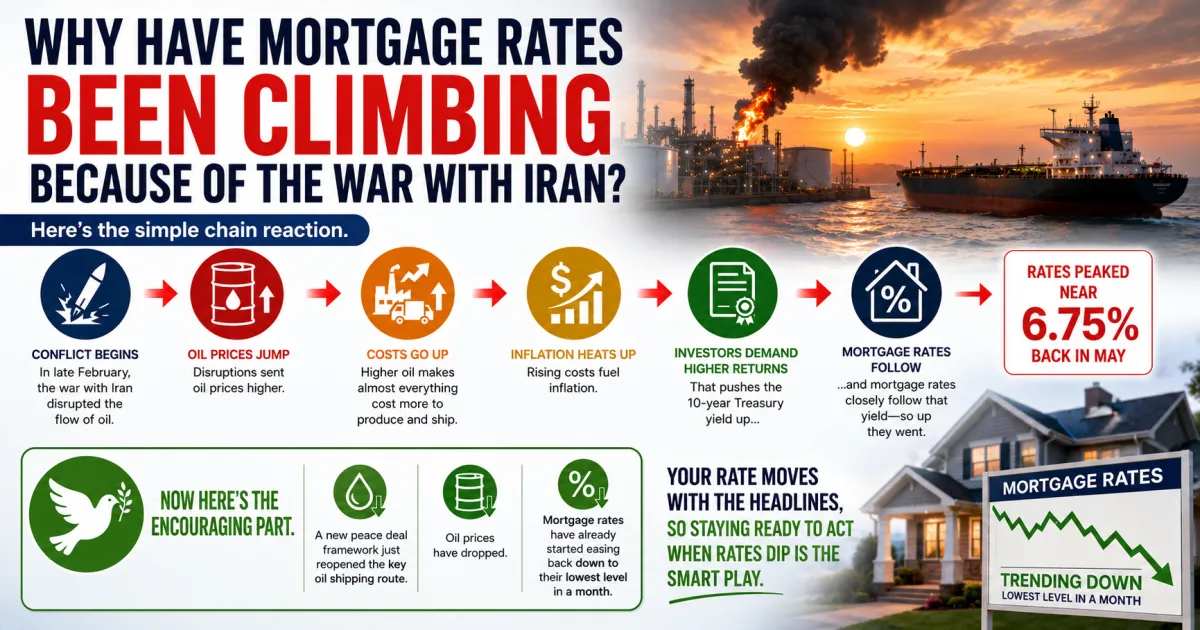
When combat operations began in late February they disrupted the flow of oil through the region. Oil prices jumped in response to that supply disruption. Everything we produce and ship has oil embedded in its cost and when oil prices rise that broad-based cost increase feeds directly into inflation across the entire economy.
When inflation heats up investors who hold bonds demand higher returns to protect against the purchasing power erosion that inflation creates. That demand pushed the ten-year Treasury yield above the 4.45 mark and at times above 4.50. Mortgage rates follow that yield closely and rates climbed alongside it peaking near 6.75 percent on the conforming side. VA rates ran somewhat lower as they typically do reflecting the government backing that makes VA loans less risky for investors.
Why Rates Are Starting to Ease
The memorandum of understanding peace framework has reopened the Strait of Hormuz and oil is no longer being disrupted in the same way. Oil prices have come back down to approximately $68 a barrel. That reduction in energy cost eases the inflationary pressure that was pushing bond yields higher and mortgage rates are starting to follow yields back down toward their lowest levels in the past month.
As Jason Stier explains your rate moves with the headlines. The conflict pushed rates up. The peace framework is pulling them back down. Whether that easing continues depends entirely on whether the framework holds and the strait stays open. The situation is still developing and nothing about geopolitical stability should be assumed to be permanent.
Why This Moment Matters Especially for VA Borrowers
For veterans and active duty service members the current environment creates a specific and compelling opportunity that Jason Stier wants to make sure the VA community understands clearly.
VA Interest Rate Reduction Refinance Loans are one of the most streamlined refinance products available anywhere in the mortgage market. When rates ease from a recent peak VA borrowers who purchased or last refinanced at higher rates have an efficient path to capturing the improvement without the full documentation burden of a conventional refinance.
For VA borrowers carrying high-rate consumer debt a VA cash-out refinance in a period of easing rates is an especially powerful combination. The VA program allows eligible veterans to access their home equity through a cash-out refinance and use those funds to pay off credit card balances, personal loans, and other high-rate obligations. Restructuring that debt into a VA mortgage at current rates while rates are easing from a peak produces meaningful monthly cash flow improvement for borrowers who have been carrying expensive consumer debt alongside their mortgage.
Staying Ready to Act Is the Smart Play
Rates move with headlines and in the current environment those headlines can shift the rate environment meaningfully in either direction with very little warning. Buyers and veterans who are pre-approved and positioned to move when rates dip capture the improvement. Those who are still working through the early stages of the process when the window opens often find it has closed before they can act.
Jason Stier works with VA borrowers and conventional buyers to stay informed about rate movements and to be positioned to act when the market creates the right opportunity. Reach out to Jason Stier to find out what the current rate environment means for your specific situation and how to make sure you are ready when the next favorable window appears.
Sources
VA.gov
FederalReserve.gov
TreasuryDirect.gov
MortgageNewsDaily.com
EnergyInformationAdministration.gov