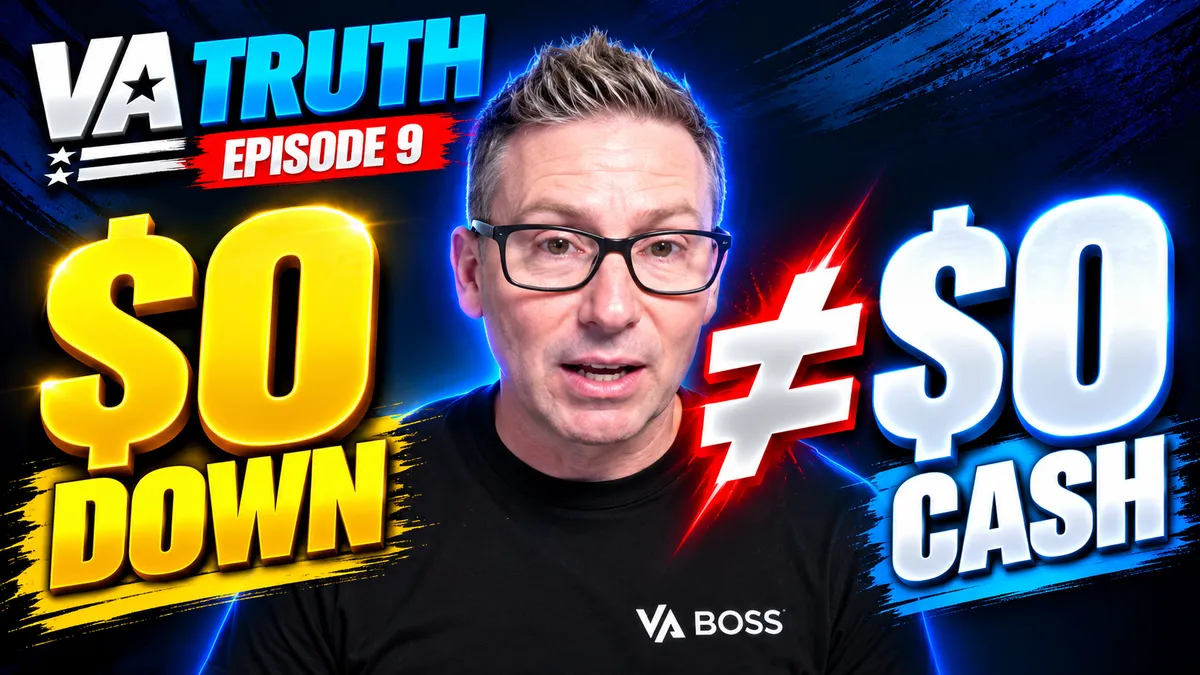
VA Loan Zero Down Does Not Mean Zero Cash to Close and Here Is What Every Veteran Buyer Needs to Know
VA Loan Boss: The Truth About Zero Down and What It Actually Means
Zero down payment and zero cash needed are completely different things. Jason Stier has been saying this for more than twenty years and it is still one of the biggest surprises he sees with first-time VA buyers. Military families talk to each other and the message that gets passed around is that there is no money out of pocket with a VA loan. That message is incomplete and it sets buyers up for a closing day surprise that is entirely avoidable.
What Zero Down Actually Means
On a four hundred thousand dollar home a conventional buyer putting five percent down is writing a twenty thousand dollar check just for the down payment. An eligible veteran using a VA loan finances one hundred percent of that purchase price. The down payment goes to zero. That is a genuine and significant benefit.
What it does not do is eliminate the other costs associated with buying a home and setting up a mortgage. Appraisals. Title work. Recording fees. Property taxes. Homeowners insurance. Lender fees. Discount points if the buyer chooses to buy down the rate. Prepaid items and escrow setup. None of those costs disappear because the down payment is zero. They still exist and someone still has to pay them at closing.
The Funding Fee Is Not a Closing Cost You Write a Check For
Most veterans using a VA loan for the first time will pay a funding fee of 2.15 percent unless they are exempt. Veterans with a disability rating of ten percent or higher are exempt from the funding fee entirely. A surprising number of veterans do not know they are exempt.
For veterans who do owe the funding fee it is the only closing cost that can be financed into the loan rather than paid at closing. That means a veteran buying a four hundred thousand dollar home does not have to bring cash for the funding fee at closing. It gets added to the loan balance. That is different from financing closing costs which cannot be rolled into a VA loan regardless of what anyone has told you.
When someone says they financed their closing costs into their VA loan what actually happened is the seller raised the sales price and paid the costs. The closing costs were still paid in cash at closing. Just by the seller rather than the buyer. That is not financing them. That is a different transaction structure and the distinction matters.
The Four Percent Myth That Is Costing Veterans Negotiating Power
The belief that sellers can only pay four percent of closing costs on a VA loan is one of the most persistent and damaging misconceptions in VA lending. It applies FHA logic to a VA transaction and produces a result that leaves money on the table for veteran buyers.
Here is how it actually works. VA separates two categories. Seller concessions and normal closing costs. The four percent cap applies to seller concessions which include things like paying the funding fee, buying down the rate, and other credits outside the standard closing cost bucket. Normal closing costs including title fees, recording fees, appraisals, and similar charges are not subject to the four percent limit. They are unlimited as long as they are usual and customary for the market.
That distinction means the actual ceiling for what a seller can contribute to a veteran buyer’s transaction is significantly higher than four percent in most cases. Realtors and lenders who apply the four percent rule to everything are limiting veteran buyers based on a misunderstanding of the VA guidelines.
How Veterans Are Legitimately Buying With Very Little Out of Pocket
On a four hundred thousand dollar purchase with ten thousand dollars in closing costs the structure works like this. The veteran negotiates seller-paid closing costs. The earnest money deposit already paid toward the transaction can potentially be returned at closing depending on how the deal is structured. When everything is set up correctly a veteran can close with very little money out of pocket not because closing costs do not exist but because the transaction was structured intelligently to account for them.
That structuring requires a realtor who understands VA loan strategy and a lender who can clearly communicate what is possible. The listing agent conversation, the offer structure, and the concession negotiation are all part of how this outcome gets produced. It is not a hack. It is the benefit working the way it was designed to work.
The Reserve Question Nobody Asks Enough
Just because a veteran can get into a home with very little cash out of pocket does not mean they should empty their bank account to do it. Homes break. Air conditioners go out. Water heaters fail without regard to whether the owner just moved in. Twenty years of doing this has taught Jason that the veterans who are in the strongest financial position after closing are the ones who used the zero down payment feature to preserve cash rather than the ones who treated the benefit as permission to arrive at closing with nothing left.
The buyer who puts twenty percent down and wears it as a badge of honor has answered one question correctly and potentially ignored a more important one. What puts your family in the strongest financial position after you close? Sometimes that means keeping cash in reserves rather than putting it toward a down payment you were never required to make.
Three Numbers Every Veteran Buyer Should Ask Their Lender For
Jason gives every veteran buyer the same three questions to ask before signing anything.
What is my down payment? For most eligible veterans the answer is zero but it is worth confirming for the specific loan.
What are my estimated closing costs and prepaids? Lenders who quote only the closing costs and leave out the prepaids are giving an incomplete number. Ask for both explicitly.
What is my estimated cash to close after all credits, deposits, and concessions are applied? That is the number that actually determines what the veteran needs to bring to closing. If a lender cannot clearly explain all three of those figures find a different lender.
What Realtors Working With Veteran Buyers Need to Understand
The highest offer price is not automatically the strongest position for a veteran buyer with strong income who wants to preserve cash. Transaction structure matters alongside price. Understanding how seller concessions work, how the four percent rule actually applies, and how to negotiate closing cost coverage for a veteran buyer is what separates realtors who effectively serve military families from those who do not.
In the current market where sellers have more motivation to negotiate than they did during the competitive peak the tools available to veteran buyers are genuinely powerful. Using them correctly requires a team that understands the benefit at a detailed level.
Subscribe to VA Loan Boss for clear VA home loan education. The next episode addresses what credit score a veteran actually needs for a VA loan. Learn more at veterancommunitymortgage.com. Defend What’s Earned.
Sources
VA.gov
KnowVA.eBenefits.va.gov
MilitaryOneSource.mil
ConsumerFinancialProtectionBureau.gov
MortgageNewsDaily.com
