Do Disabled Veterans Pay Property Taxes and Here Is What Every Veteran Needs to Know Right Now
The Question That Depends Entirely on Where You Live and What You Have Earned
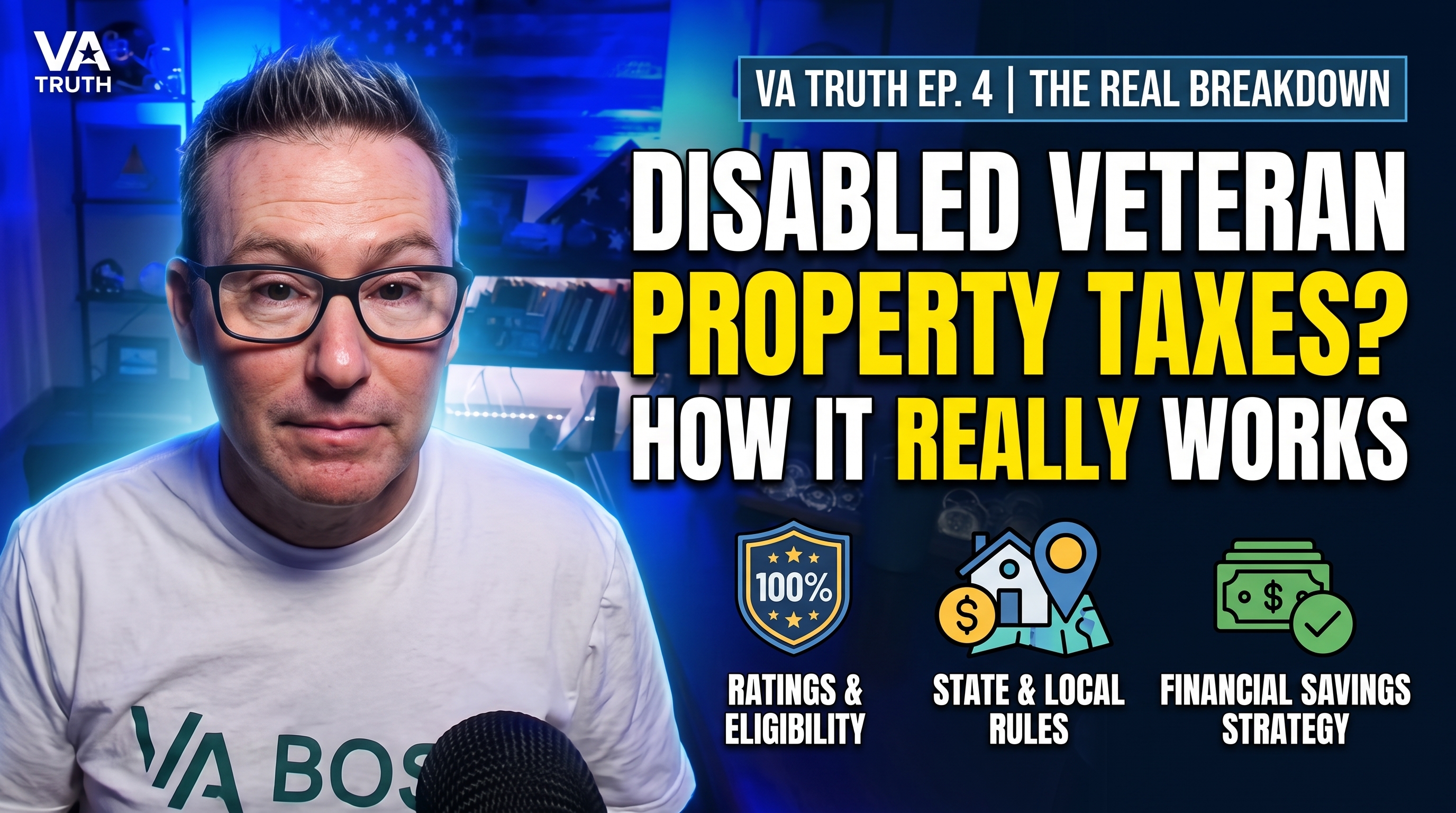
Do disabled veterans pay property taxes? The answer is not a simple yes or no. It depends on the state you live in, your disability rating, your eligibility under state and local rules, and the specific exemptions your taxing authority offers. Jason Stier breaks it all down in Episode 4 of VA Truth and the conversation covers far more than a yes or no answer can capture.
Why Property Tax Exemptions Vary So Widely
Property taxes are a state and local benefit. The federal government does not set a uniform standard for veteran property tax exemptions. Every state establishes its own rules, its own eligibility thresholds, its own exemption amounts, and its own application process.
That means a veteran with a one hundred percent VA disability rating in one state may pay zero property taxes while a veteran with the same rating in a neighboring state may pay a reduced amount or face a more complex eligibility process. The one hundred percent rating does not automatically translate to zero property taxes everywhere. The rules of the specific state and local taxing authority govern what is available and how to access it.
Understanding this distinction matters before a veteran assumes they know what their situation looks like or before a homebuyer in a military family incorporates a property tax exemption into their housing budget without verifying whether and how it applies.
How Property Tax Exemptions Affect Monthly Housing Costs
For veterans who do qualify for significant property tax exemptions the impact on monthly housing costs can be meaningful. Property taxes are typically collected through mortgage escrow and are included in the monthly payment. A reduction in the tax obligation reduces the monthly escrow requirement and therefore reduces the total monthly housing payment.
That reduction is one of the concrete financial benefits that can make homeownership more accessible for disabled veterans. But it requires understanding how the exemption is applied, when it takes effect, and how a lender will treat it during the mortgage qualification process.
Jason covers how an exemption may be handled during the loan process because a property tax exemption that has not yet been applied or that is conditional based on future rating decisions may be treated differently by underwriting than one that is already in place and documented.
The Bigger Financial Strategy Worth Understanding
The property tax exemption conversation is one piece of a larger financial picture that too many veterans never see assembled in one place. VA disability compensation provides monthly income that is not federally taxable. State veteran benefits vary but can include additional financial support depending on the state. Property tax exemptions reduce ongoing housing costs. Education benefits support career and earning development. And the VA home loan provides a path to homeownership with zero down payment and no private mortgage insurance.
Each of these benefits was designed to support veterans individually. When they work together strategically they can produce a financial foundation that is significantly stronger than most veterans realize is available to them.
What Veterans and Military Families Should Do
Verify your specific situation with your state's official veterans affairs agency and your local property tax authority. The rules are local and the only way to know what applies to your situation is to check the source rather than relying on general information that may not reflect your state's current guidelines.
If you are active duty, Guard, Reserve, a veteran, a disabled veteran, or part of a military family Jason Stier is building this series specifically for you. Subscribe to VA Truth for straightforward education on veteran benefits, military money, VA home loans, homeownership, and building long-term wealth.
You have earned these benefits. The next step is making sure you are actually using them.
Sources
VA.gov
MilitaryOneSource.mil
NationalConferenceofStateLegislatures.org
ConsumerFinancialProtectionBureau.gov
MortgageNewsDaily.com
